
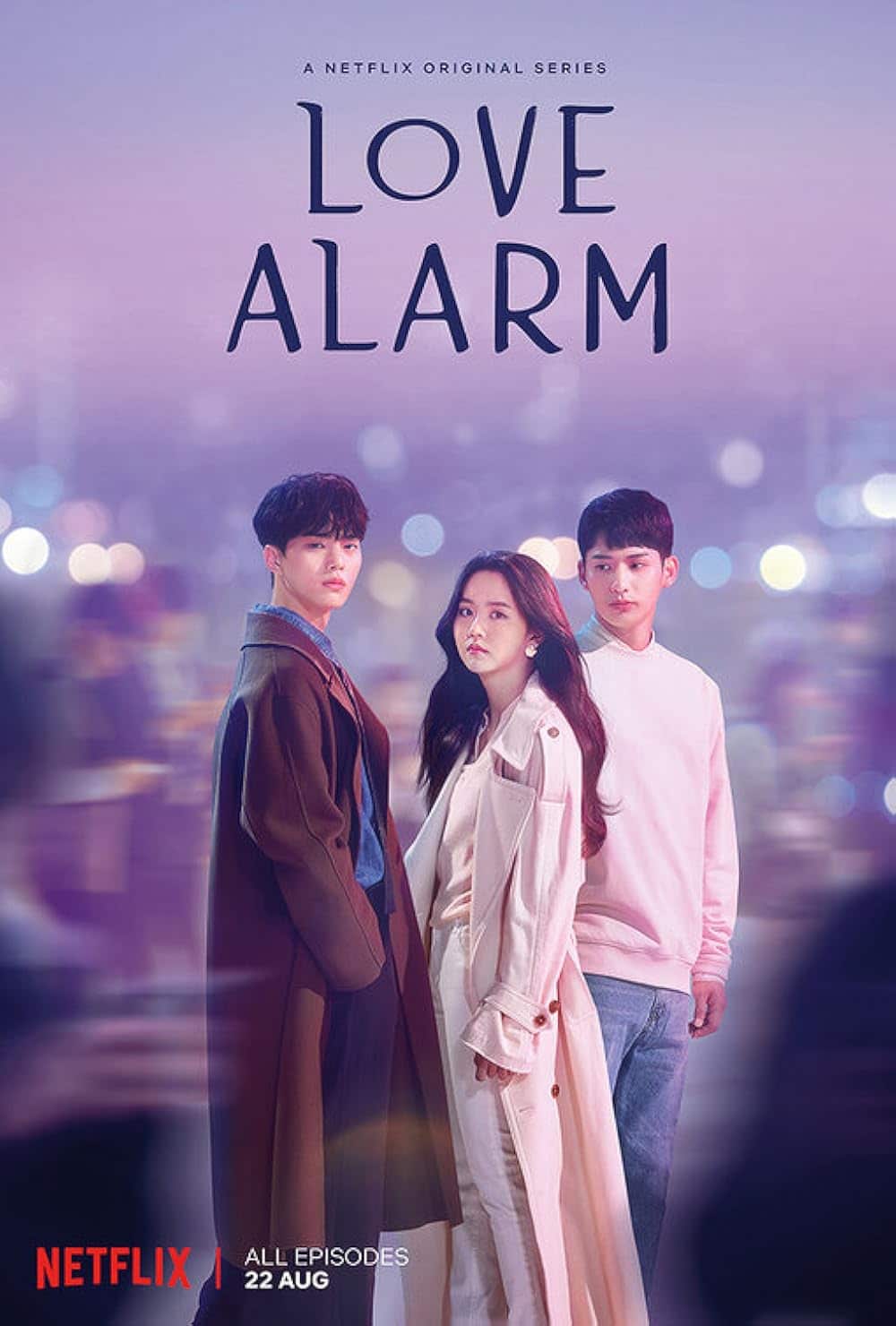
Hello, everyone! How’s everything going? Today, I’m excited to share my thoughts on the drama Love Alarm, which has enchanted young viewers globally with its unique take on romance influenced by technology, emotional depth, and the complexities of teenage relationships in today’s digital landscape.
Advertisements
Debuting on Netflix on August 22, 2019, and wrapping up its second season on March 12, 2021, the series consists of 14 episodes, each averaging around 60 minutes. Adapted from the well-known webtoon by Chon Kye-young, this Korean romantic drama marked Netflix’s first original series from Korea, featuring actors Kim So-hyun, Song Kang, and Jung Ga-ram entangled in a love triangle that examines the intricacies of contemporary romance.
Set in a universe where the groundbreaking Love Alarm app alerts users when someone nearby has romantic feelings for them—without disclosing the person’s identity—this straightforward idea weaves a complex tapestry of relationships, misunderstandings, and emotional truths that challenge conventional views of love and attraction.
The series delves into themes of youthful love, societal expectations, family trauma, and the interface between technology and human emotions. It strikes a balance between adolescent romance and profound psychological insights, investigating how external affirmation impacts self-esteem and interpersonal relationships. Each episode examines the complications that arise when private emotions are exposed to the public, creating both chances and barriers for genuine connections.
Kim Jojo: The Girl Struggling with Her Emotions
Kim So-hyun gives a powerful portrayal of Kim Jojo, a high school student grappling with familial tragedy and financial struggles, who finds herself at the heart of a love triangle following the launch of the Love Alarm app. Jojo’s character reflects the challenges young individuals face as they attempt to comprehend their emotions while adhering to societal norms.
Jojo’s failure to trigger anyone’s Love Alarm becomes a pivotal mystery that fuels much of the series’ emotional stakes. Her journey reveals the psychological defenses she has erected around her heart due to past traumas, making her character arc both relatable and profoundly touching. Kim So-hyun conveys both vulnerability and strength in her role, illustrating how young people often shield themselves from love, even when they yearn for it.
Jojo’s transformation from someone who fears emotional intimacy to a person embracing vulnerability is central to both seasons, with her decisions impacting not only her happiness but also the well-being of those around her.
The Love Triangle: Sun Oh vs Hye Young
Song Kang as Lee Sun Oh and Jung Ga-ram as Hwang Hye Young create one of the most emotionally intricate love triangles in K-drama. Sun Oh, the charismatic and self-assured student, symbolizes passion and intensity, while Hye Young, Jojo’s childhood friend, represents steadfast loyalty and affection.
The Love Alarm app complicates their dynamics by generating scenarios where feelings are revealed before the characters are prepared to confront them. Both young men genuinely care for Jojo, yet their differing approaches to love and life create significant contrasts that extend beyond the typical romantic rivalry.
Song Kang and Jung Ga-ram infuse depth into their characters, breaking free from the typical