
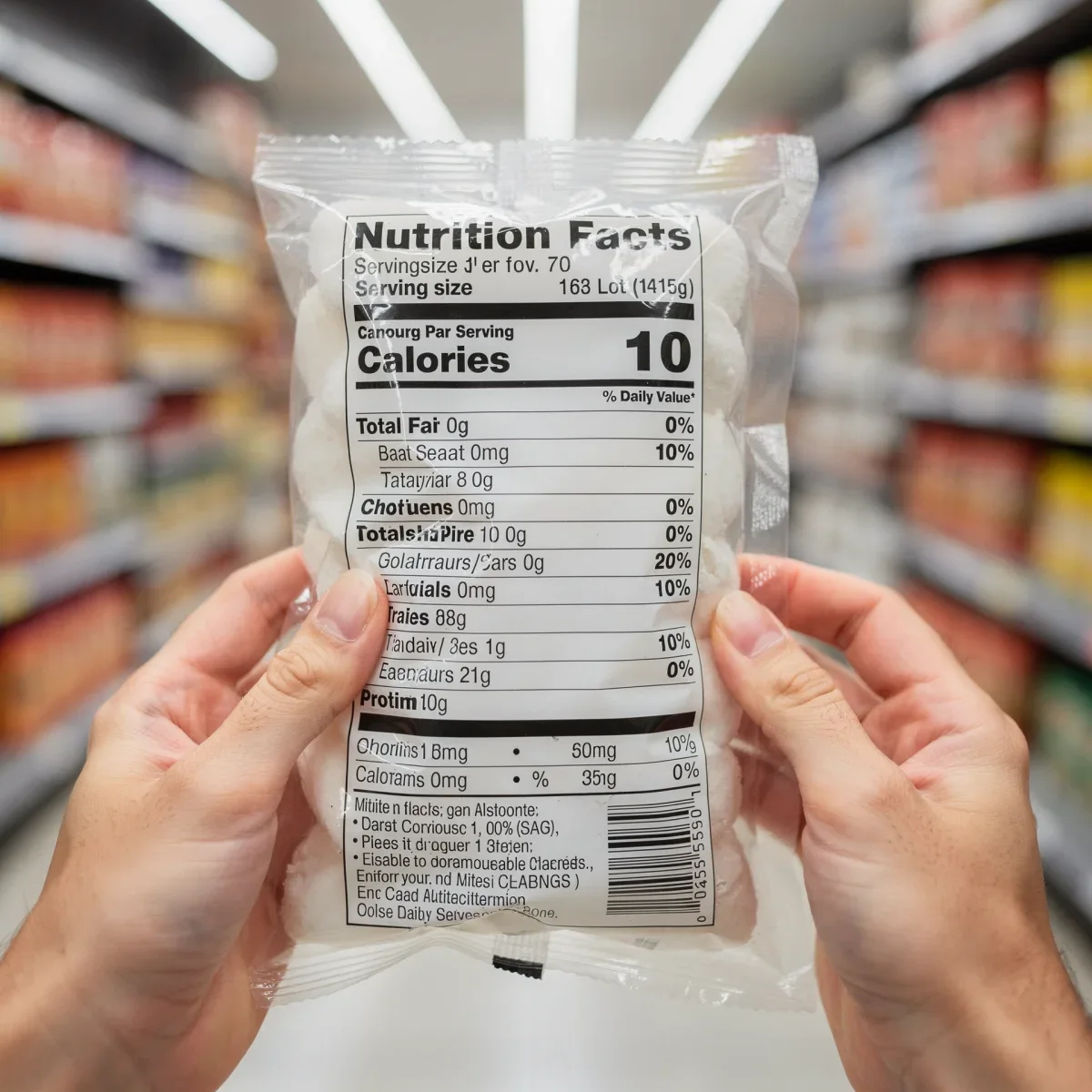
Standing in the grocery aisle trying to decipher food packaging can feel overwhelming. Bright claims on the front of a box often promise high energy, low fat, or natural goodness, but the real story lives on the back panel. Master the art of reading nutrition labels, and you can instantly cut through clever marketing to make confident, balanced choices for your kitchen.
Advertisements
Start with Serving Size and Total Servings
The serving size sits at the very top of the Nutrition Facts panel, and it governs every single number listed below it. In the U.S., serving sizes reflect the amount people typically consume in one sitting, not necessarily a recommended portion. A standard 15-ounce can of soup or a grab-and-go bag of trail mix often contains two or more servings.
Before checking the calories or sodium, look at how many servings are in the container. If a single serving of a snack has 180 calories and 400 milligrams of sodium, eating the entire package doubles or triples those amounts. Taking five seconds to verify the serving size prevents accidental overconsumption.
Decode the Percent Daily Value (%DV)
The Percent Daily Value (%DV) column shows how much a nutrient in one serving contributes to a standard 2,000-calorie daily diet. Even if your personal calorie needs differ, the %DV serves as a reliable ruler for quick comparisons across brands at Target, Walmart, or your local supermarket.
A quick rule of thumb from health authorities simplifies the math:
- 5% DV or less means the food is low in that nutrient.
- 20% DV or more means the food is high in that nutrient.
Use the 5/20 guideline to quickly assess whether a product delivers meaningful nutrition or excess filler.
Nutrients to Limit vs. Nutrients to Get More Of
Not all calories provide equal value. When evaluating a label, split the nutrient list into components you want to minimize and components you want to prioritize.
| Nutrient Category | Target Goal | Why It Matters |
|---|---|---|
| Saturated Fat & Sodium | Aim Low (5% DV or less) | Mainstream cardiovascular guidance links excess intake to higher heart disease risks. |
| Added Sugars | Aim Low (Under 10% daily calories) | Provides empty calories without essential vitamins or minerals. |
| Dietary Fiber | Aim High (20% DV or more) | Supports digestive health and helps maintain steady blood sugar levels. |
| Vitamin D, Calcium, Iron, Potassium | Aim High (10% to 20%+ DV) | Essential micronutrients that many Americans fall short on consuming daily. |
Spotting Sneaky Added Sugars and Ingredients
The FDA requires manufacturers to list "Added Sugars" separately under "Total Sugars." Total sugars include naturally occurring sugars found in fruit (fructose) or dairy (lactose), while added sugars cover syrups, cane sugar, and honey incorporated during processing. The American Heart Association recommends limiting added sugar to 25 grams per day for women and 36 grams for men.
Always glance at the ingredient list, which arranges items by weight from highest to lowest. If sugar, high-fructose corn syrup, cane juice crystals, or maltodextrin appear in the first three ingredients, that food contains a heavy concentration of sweetener. Look for short lists with recognizable, whole-food ingredients.
Quick Takeaways
- Check the serving size first to determine whether the listed values match what you actually eat.
- Apply the 5/20 rule: 5% DV or less is low, while 20% DV or more is high.
- Focus on getting more dietary fiber, vitamin D, and potassium while keeping added sugars and sodium low.
Frequently Asked Questions
What is the 5/20 rule on nutrition labels?
The 5/20 rule is a fast way to evaluate % Daily Value. If a nutrient has 5% DV or less, it is considered low. If it has 20% DV or more, it is considered high.
Are total sugars and added sugars the same thing?
No. Total sugars include naturally occurring sugars from fruit and milk alongside added sugars. Added sugars reflect extra sweeteners like cane sugar, syrup, or honey introduced during manufacturing.
How do I know if a product is truly whole grain?
Check the ingredient list rather than the front packaging. The first ingredient should explicitly state "whole grain" (such as whole wheat flour or whole oats), not enriched wheat flour or multigrain.
Becoming confident with reading nutrition labels takes only a few shopping trips to become second nature. Flip packages over, scan the daily values, and select foods that nourish your body best. Start by inspecting two items in your pantry today, or check out our guide to building a balanced grocery list on a budget.
This article is for informational purposes only and is not a substitute for professional medical advice. Talk to your doctor before making changes to your health routine.