
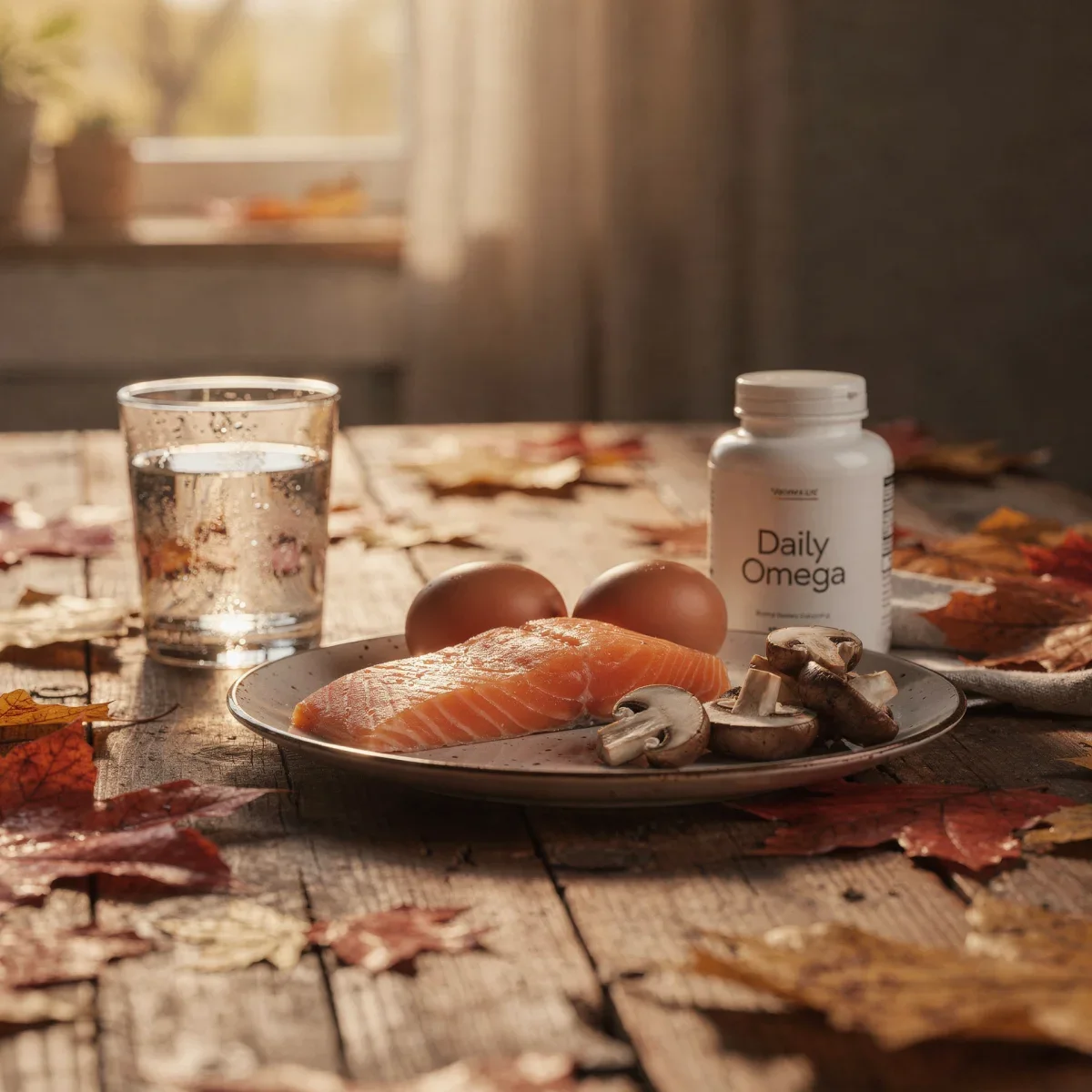
When the crisp autumn air arrives and the leaves begin turning vibrant shades of amber and gold, our daily routines shift. We swap t-shirts for cozy knit sweaters, spend more evenings indoors, and watch the sun set earlier each week. While fall brings plenty of seasonal joy, it also signals a sharp drop in your natural sun exposure, making it essential to understand how your body handles vitamin D in fall.
Advertisements
Often called the sunshine vitamin, vitamin D plays an indispensable role in maintaining strong bones, supporting immune defenses, and stabilizing mood. During the summer months, a short walk in midday sunlight can provide all the ultraviolet B (UVB) light your skin needs to synthesize this crucial nutrient. Once October arrives across most of the United States, however, the sun sits lower on the horizon, filtering out the specific UVB wavelengths required to trigger natural synthesis.
Why Seasonal Changes Impact Your Vitamin D Levels
Your body produces vitamin D3 when direct sunlight strikes bare skin. Specifically, UVB rays interact with 7-dehydrocholesterol in skin cells to initiate synthesis. However, as the Earth tilts away from the sun during autumn and winter, atmospheric layers absorb the vast majority of UVB rays before they reach ground level.
If you live north of roughly 37 degrees latitude—an imaginary line stretching from San Francisco through Richmond, Virginia—the angle of the sun between late October and early March makes it nearly impossible to produce adequate vitamin D naturally, regardless of how much time you spend outside. Adding cooler temperatures into the mix means we wear longer sleeves, coats, and hats, leaving minimal skin exposed to whatever ambient light remains.
Common Signs of Low Vitamin D
Because the body stores vitamin D in fat tissue and the liver, you might not notice a drop right when summer ends. By mid-to-late autumn, however, those summer reserves often deplete. Common indicators of suboptimal levels include:
- Persistent low energy: Unexplained sluggishness or daytime fatigue that persists despite getting enough sleep.
- Frequent seasonal bugs: Vitamin D supports white blood cell activity; low levels may leave you more susceptible to routine respiratory bugs.
- Aches in bones and joints: Because vitamin D regulates calcium absorption, deficiency can manifest as dull, aching discomfort in weight-bearing bones.
- Shifts in mood: Reduced light and declining vitamin D status are frequently linked with seasonal mood slumps and lethargy.
Top Food Sources to Support Your Levels
When sunlight cannot do the heavy lifting, your diet becomes your frontline defense. While very few whole foods contain high concentrations of vitamin D naturally, incorporating a mix of fortified options and nutrient-dense whole foods can help bridge the seasonal gap.
| Food Source | Serving Size | Approximate Vitamin D (IU) |
|---|---|---|
| Wild Salmon (cooked) | 3 oz | 400–600 IU |
| Canned Light Tuna | 3 oz | 150–200 IU |
| UV-Exposed Mushrooms | 1/2 cup | 300–400 IU |
| Fortified Milk or Plant Milk | 1 cup (8 oz) | 100–120 IU |
| Egg Yolks | 1 large yolk | 40–50 IU |
Smart Supplementation: D3 vs. D2
For many adults, food alone cannot fully compensate for lost summer sunshine. When browsing the supplement aisle at Target, CVS, or Amazon, you will generally see two forms: Vitamin D2 (ergocalciferol) and Vitamin D3 (cholecalciferol). Research shows that Vitamin D3 is significantly more effective at raising and maintaining sustained blood concentrations in humans.
The recommended dietary allowance (RDA) for most adults is 600 to 800 IU daily, though many healthcare providers suggest 1,000 to 2,000 IU during the colder months depending on your baseline. Because vitamin D is fat-soluble, always take your supplement with a meal containing healthy fats—such as avocado, eggs, or nuts—to maximize absorption.
Quick Takeaways
- Sunlight alone cannot maintain your vitamin D status in the fall if you live in the northern half of the country.
- Fatty fish, fortified dairy or plant milk, and UV-treated mushrooms are among the strongest dietary allies.
- Taking a Vitamin D3 supplement with a meal containing healthy fats ensures optimal absorption through the autumn months.
Frequently Asked Questions
Can I get enough vitamin D through an open window in the fall?
No. Standard window glass blocks almost all UVB radiation while letting UVA through. To synthesize vitamin D, your bare skin requires direct, unobstructed outdoor sunlight during peak midday hours.
How do I know my exact vitamin D blood level?
Ask your doctor for a 25-hydroxy vitamin D blood test. Most major health organizations consider levels between 30 and 50 ng/mL optimal for bone and overall metabolic health.
Can you take too much vitamin D?
Yes. Because it is fat-soluble, excess vitamin D accumulates in body tissues over time. Avoid exceeding 4,000 IU per day unless explicitly instructed and monitored by your healthcare professional.
Paying attention to your nutrition and daily habits as the seasons turn is one of the easiest ways to keep your energy and immune system strong. If you suspect your levels are falling, schedule a quick check-in with your primary care provider to tailor the right autumn wellness plan for your body.
This article is for informational purposes only and is not a substitute for professional medical advice. Talk to your doctor before making changes to your health routine.