
When freezing temperatures and early sunsets roll in, staying active is usually the first routine that suffers. Hitting a healthy count of daily steps in winter does not mean forcing yourself through icy blizzards or intense gym sessions. With a few low-stress adjustments to your everyday schedule, you can keep your body moving comfortably all season long.
Advertisements
Creative Indoor Habits to Build Daily Steps in Winter
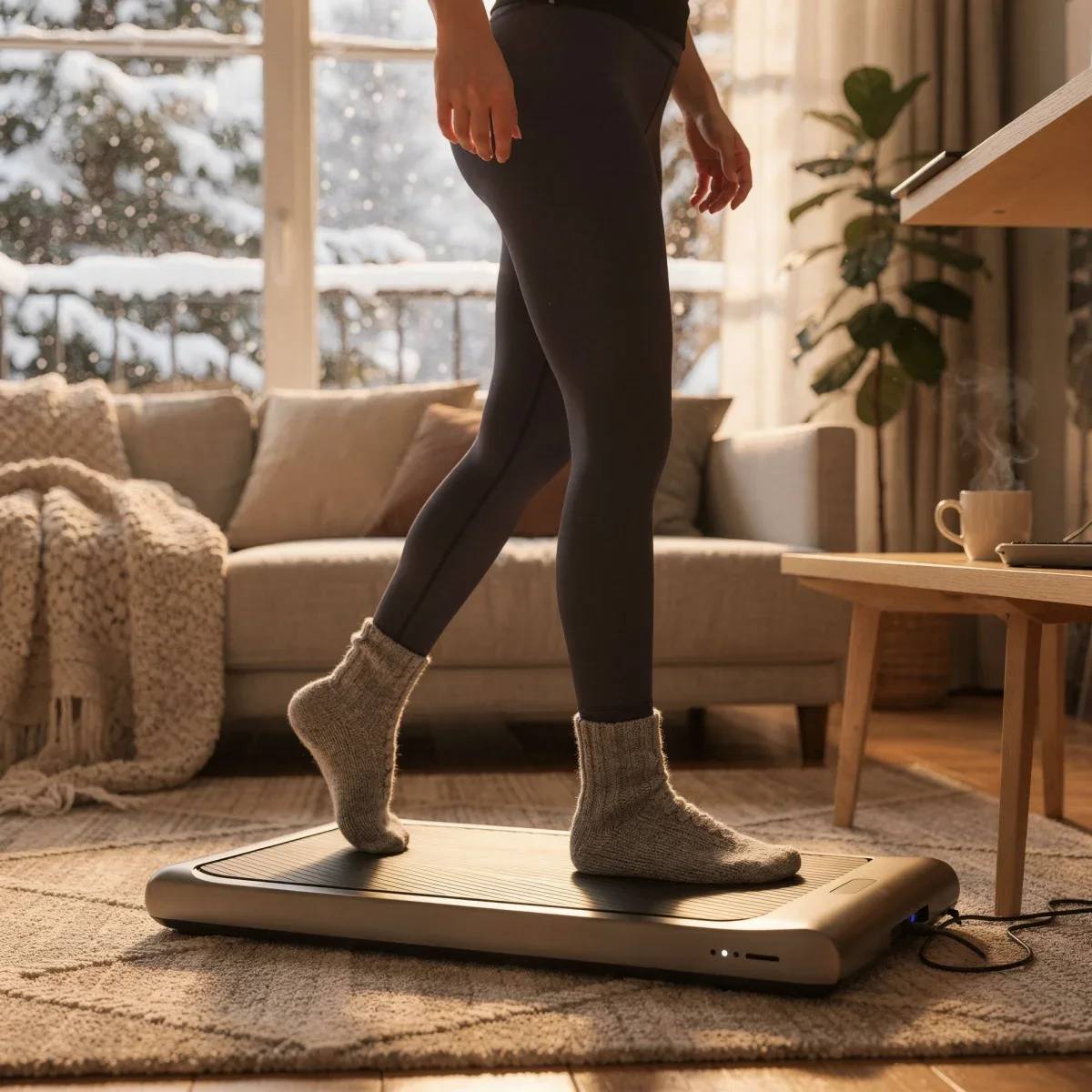
Your living room can become your best fitness ally when roads are slick. One of the most sustainable solutions is adding a compact walking pad to your workspace or living area. Available on Amazon or Target for a wide range of budgets, these flat treadmills slide under a standing desk or in front of the TV, letting you log 2,000 steps during a single 20-minute episode.
If you prefer not to buy equipment, indoor destination walking works wonders. Head to a local indoor mall, a large retail store like Target or Home Depot, or a public library. Window shopping in climate-controlled spaces allows you to stroll at an easy pace without dodging snowdrifts or cold wind gusts.
Making Cold-Weather Outdoor Walks Actually Enjoyable
Getting outside during daylight hours supports your circadian rhythm and mood, both of which take a hit during short winter days. The secret to painless winter walking is dressing in lightweight, moisture-wicking layers rather than one heavy, bulky coat.
- Base Layer: Choose merino wool or synthetic thermal tops to keep sweat away from your skin.
- Footwear: Wear trail sneakers or insulated walking boots with deep rubber treads to prevent slips on damp pavement.
- Accessories: A fleece-lined beanie, touchscreen gloves, and a neck gaiter make a 25°F morning feel surprisingly mild.
Aim for a brisk 10-to-15-minute loop right around noon when the sun is at its highest and warmest. Even a short midday walk can add 1,500 steps while giving you a healthy dose of natural light.
Small Movement "Snacks" That Add Up Fast
You do not need to walk for an hour straight to make meaningful progress. Spreading short bursts of movement throughout your day—often called exercise snacks—removes the pressure of dedicated workout blocks.
- Pace while taking phone calls or listening to voice notes.
- Do two gentle laps around your home every time you wait for your coffee to brew or water to boil.
- Take the stairs instead of the elevator whenever you visit offices or shopping plazas.
- March in place for five minutes while listening to an audiobook or podcast.
Quick Takeaways
- Embrace indoor spaces: Walking pads, local malls, and museums keep you moving without exposure to freezing weather.
- Layer smartly: Moisture-wicking fabrics and high-traction footwear make short midday outdoor strolls comfortable and safe.
- Accumulate gradually: Three 10-minute micro-walks deliver the same step count as one long session without draining your energy.
Frequently Asked Questions
How many steps should I aim for during winter?
Research suggests that getting 6,000 to 8,000 steps daily offers strong cardiovascular and metabolic benefits. If your usual baseline drops in winter, aim for an extra 1,000 to 2,000 steps above your current average.
Does pacing around the house really count?
Yes. Fitness trackers and pedometers measure total steps regardless of where you take them. Pacing indoors during chores, phone calls, or commercial breaks adds functional movement to your day.
How can I stay motivated to walk when it gets dark early?
Pair your walking time with an enjoyable habit, such as listening to a favorite podcast or calling a friend. Shifting your main walk to your lunch break also helps take advantage of limited daylight.
Keep Moving This Season
Maintaining your daily steps in winter is all about consistency over intensity. Pick one or two gentle ideas from this list to try tomorrow, whether that means pacing during your morning coffee or taking a quick lunch stroll. For more seasonal wellness tips, explore our guide to building an energizing winter morning routine.
This article is for informational purposes only and is not a substitute for professional medical advice. Talk to your doctor before making changes to your health routine.